


WHY DIGITAL RECEIPTS ARE TAKING OFF ACROSS EUROPE
The International Imperative
French authorities have jumped into action to tackle waste head-on with their impressive anti-waste law (Law No. 2020-105). Say au revoir to the old “produce, consume, throw away” mentality as France paves the way towards a circular economy. This law aims to slash waste and educate consumers, bringing a much-needed wave of change.
This legislation takes a significant step-change by banning the systematic printing and distribution of post-purchase receipts in bricks and mortar stores, including credit card receipts and those from ATMs, to offer customers a new approach. Once it takes effect, it will bid adieu to the days of endless paper receipts cluttering up our lives. The reign of paper receipts is on a swift decline, making way for a more eco-friendly and streamlined approach.
Why this, why now?
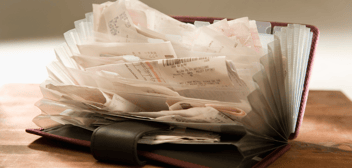
“I don’t need a Re—…” You trail off as you realise the receipt has already printed halfway; you scrunch it up and dump it in a bin by the till. In many cases, customers don’t even receive the receipt before discarding or forgetting it in a bag. It’s about time the industry takes a stand on tackling such unnecessary waste.
In France, it’s estimated that an average hypermarket uses over 10,000 rolls of thermal paper a year. There’s no shortage of statistics that point out the negative environmental impact paper receipts generate each year.
“The anti-waste law for a circular economy that we present is an ambitious piece of legislation to come out of the throw-away society. It proposes a more sober daily life in which manufacturers are more accountable, local authorities are relieved, and consumers are better informed to become more involved in the transition during their purchases. A time when producing to destroy is no longer acceptable.” Brune Poirson, Secretary of State attached to the Minister of Ecological and Inclusive Transition
As of summer 2023, while consumers have the right to request a paper receipt,, we expect to see many retailers utilise this opportunity to capture customers’ details with digital receipts.
Are other countries following suit?

Does Germany still automatically print paper receipts?
Germany is also signalling a shift towards digital receipts. In September 2026, the German Federal Cabinet approved a draft law that would remove the current paper receipt obligation from 2028, with digital receipts becoming the standard while customers would still be able to request a paper copy.
The proposed changes are designed to reduce the administrative burden on businesses and reflect the growing adoption of digital alternatives at checkout. For retailers, the move is another indication that digital receipts are becoming an increasingly important part of the modern in-store experience, offering an opportunity to do more than simply replace paper by connecting the transaction to customer identification, loyalty, engagement and post-purchase services.
Does Austria still automatically print paper receipts?
From October 2026, businesses will be able to issue digital receipts as part of a new cash register package introduced by the government. Importantly, the change is voluntary, meaning customers can still choose to receive a paper receipt.
The move is designed to reduce the administrative burden associated with paper receipts, while giving both retailers and customers greater flexibility. The new rules will also introduce a machine-readable code on receipts, which will support a planned receipt lottery from October 2026.
Digital receipts are becoming part of retail policy and infrastructure across Europe, but different markets are taking different approaches to how they are introduced. Austria’s voluntary approach is another example of how governments are beginning to support digital receipt adoption while still giving customers a choice in how they receive their receipts.
Does Sweden still automatically print paper receipts?
Consumers in Sweden are increasingly opting for digital receipts. “Paper receipts are limited in their design. We want the receipt to be more interactive, something the customer wants to keep or share, which creates added value. By focusing on what each customer wants, our digital receipt service can enhance the shopping experience”, says Carita Weiss, Head of Payments at Coop Sweden.
Does Finland still automatically print paper receipts?
A study in Finland calculated that by digitising paper receipts, many retailers were experiencing significant economic benefits, around 5-7 Euros per transaction. The saving was made up of automation in decision-making, forecasting and administrative reports due to the digitisation. As well as saving paper and printing costs.
Does Italy still automatically print paper receipts?
In Italy, we’ve witnessed a novel approach to tackling receipts in the form of the “Lottery of Receipts.” Any transaction includes an invitation to participate in a state lottery, with each electronic receipt representing an entry. Retailers not offering this are liable to pay a fine! Digital receipts are a must-have if you want to operate in Italy.
The Role of Fiscalisation
Depending on your role, you may not be familiar with this term, but it’s an important one. In a nutshell, Fiscalisation exists to streamline tax calculation and collection and to prevent VAT fraud.
As you may know, if you sell in some countries*, you must ensure that you report your VAT transactions to authorities, which means your retail systems must meet requirements for these fiscal laws.
*such as Austria, Bosnia & Herzegovina, Bulgaria, Croatia, Czech Republic, France, Germany, Greece, Hungary, Italy, Norway, Poland, Romania, Serbia, Slovak Republic, Slovenia, Sweden, or Ukraine

Unfortunately, each country is has different fiscal requirements. Traditionally each transaction generates multiple receipts: one for the authorities and often both a fiscal and transaction receipt one for the customer. It’s no surprise that more and more retailers are seeing the value in using a solution such as Yocuda’s to automate and digitise the receipts for the customer, reducing paper waste and improving the customer experience,
Yet another reason why digital receipts are taking off.
The tide is turning across Europe, with more and more countries examining their laws on paper vs digital receipts. Many countries are taking significant steps to encourage digital receipt adoption both for ethical and sustainable reasons and to provide greater clarity on potential tax evasion and retail fraud.
Rather than waiting for the government to take action, we recommend all retailers explore how they can adopt digital receipts across all of their domestic and international stores.
Get in touch with our skilled team who can help you on your digital receipt journey.